What kind of custom hardware in lab automation requires micro-CNC machining?
Custom hardware for lab automation requiring micro-CNC machining must include a large variety of detailed small components that are precision machined, cost appropriate, and material based. Typical parts would be:
- Custom fluid manifolds - accurate liquid routing by automated pipetting or dispensing of reagents.
- Custom brackets for alignment or to hold sensors, cameras, or optical components in a fixed position.
- Custom nozzles for dosing, spray, or flow rates where the flow rate is critical, and where the channel dimensions might also be critical.
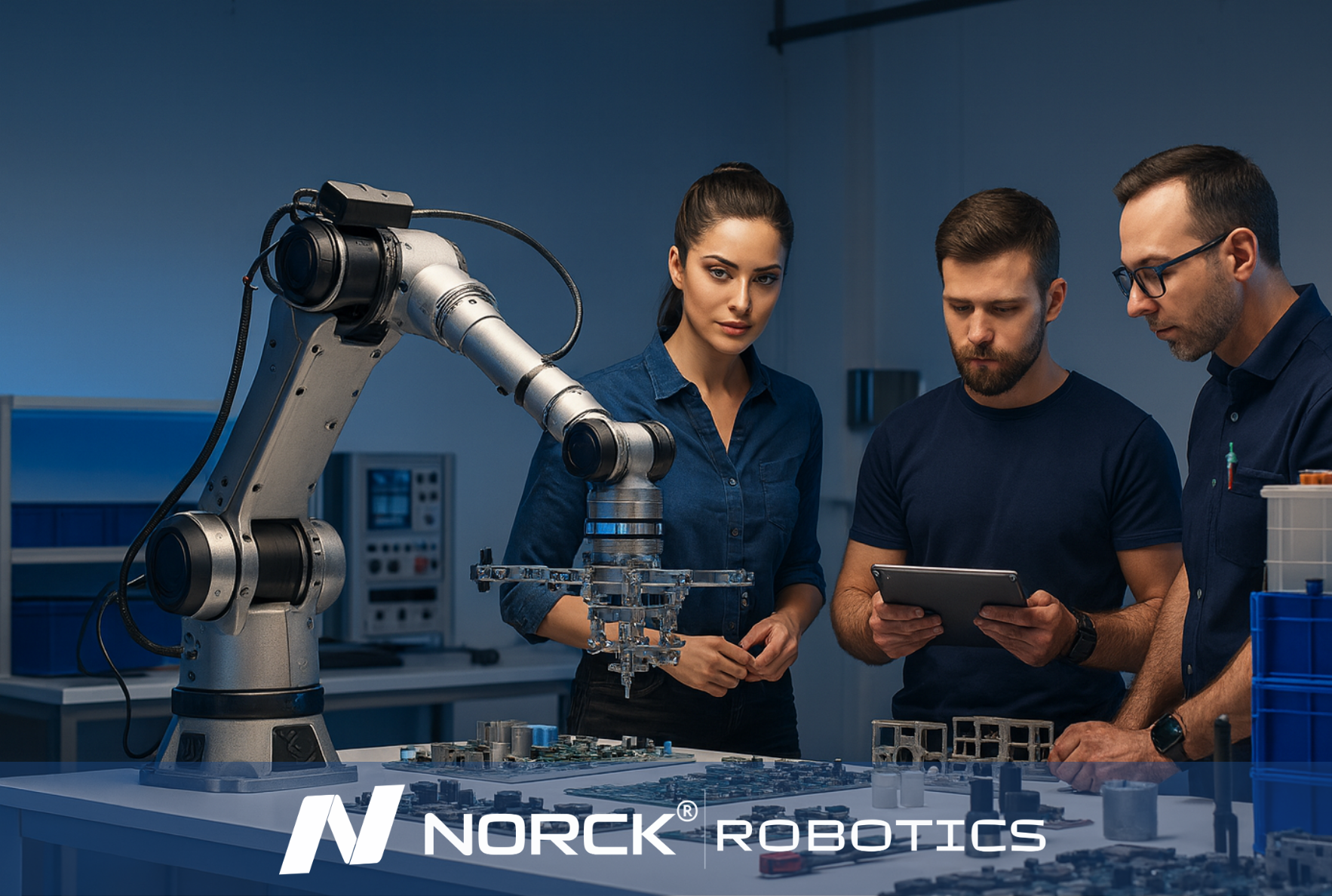
- Robotic components that are miniature versions of robotic joints or arms that are part of a robot or housing in a small lab instrument.
These micro CNC machined parts are often made from chemically resistant plastics such as PEEK or POM, or from stainless steel, where appropriate, for longer service life, chemical compatibility, and better mechanical stability in potentially hostile laboratory environments.
Why is high precision essential for parts used in alignment or liquid handling?
When working with parts that impact liquid handling or alignment used in lab automation, high precision is crucial, as even minor discrepancies can prevent reliable results, misalignment or allow liquids to leak. Here is why high precision is important:
- Finding Alignment: Parts that have been precision machined into brackets or holders will allow for a sensor, lens, or pipette head to be placed exactly where it is supposed to be, so that reliable and repeatable measurements or operations can occur.
- Uniform flow: Since most fluid systems, or equipment that has flowing fluids like micro-machined nozzles or manifolds, need tolerances in order to keep flow rate, maintain proper separation of materials, or achieve proper seals.
- Reduced method error: Reducing method error variability is particularly apparent when high precision parts are used, regardless of circumstances and amount of throughput, where hundreds, or perhaps thousands of samples are being measured.
- Miniaturization: Most lab instruments are typically miniaturized, which can impose limitations on the parts and methods that function properly, justifying the utility of micro CNC machining.
In conclusion, micro CNC machining will produce parts with tolerances to produce stable, repeatable, and accurate lab automation.
What materials are typically used for these micro-machined lab components?
Micro-machined lab components are usually made from materials that generally offer chemical resistance, stability, and or biocompatibility; the details will depend on their application. The common materials include:
- PEEK (Polyether ether ketone): PEEK is a high-performance plastic with remarkable chemical resistance, thermal stability, and mechanical strength and is adequately suitable for a manifold, fluid paths, and structural parts of automated systems.
- POM (Polyoxymethylene or Delrin): POM is a low-friction engineering plastic that can be used for moving parts, modules, and other components that call for some wear-resistance, good machinability, and structural strength.
- Stainless Steel (316L and similar): Useful when strength, corrosion-resistance, or sterilizability is essential. Usually employed in fluid connectors, precision nozzles, and pins/ alignment pins.
- Aluminum: Utilized sparingly for components in a non-corrosive environment requiring lightweight and preferred tolerances.
- PTFE (Teflon): Chosen for components in a chemically aggressive environment due to its exceptional low friction.
These materials do allow precision and repeatability for today's lab automation.
How does micro-machining enable complex or miniature designs for lab equipment?
Micro-machining allows for complex or miniature designs of lab equipment because of its ability to fabricate very small and highly detailed components, with very tight tolerances and complex geometries. This is an important advantage in laboratory automation where parts must do very specific things, and there are often three-space limitations with regards to maneuvering and arguably even more limitations involving available volume. Here are some factors to consider when using micro-machining or when micromachining supports a design:
- Micron-level detailing allows for the minimum space of fluid control channels and micro-nozzles, as well as the design of a mount that is as minimally invasive in most cases.
- Micro-machining allows for complex internal features such as cross-drilled manifolds or capillary pathways to be fabricated without sacrificing integrity.
- Micro-machining supports customization of parts for functions such as fitting into an assembly of compact robotics (that would otherwise compromise the overall design) or aligning optics at high accuracy and precision.
- Micro-machining provides repeatable quality, which is particularly important in ensuring the hardware performs correctly in laboratories that may involve high throughput.
Ultimately, micro-machining helps to achieve the balance of form factor and function of sophisticated lab systems.