Skip to content
Industrial Safety Systems

Industrial Safety Systems

Industrial Safety Systems by Norck Robotics are engineered to protect people, equipment, and production processes in advanced automation and robotic environments. By combining mechanical safety solutions, safety-rated components, and intelligent system integration, Norck Robotics helps manufacturers achieve safe, compliant, and reliable operations without compromising productivity.

At Norck Robotics, Industrial Safety Systems are designed as application-specific safety solutions tailored to robotic cells, automation lines, and custom machinery. These systems integrate physical safety mechanisms, safety components, and engineered structures to ensure machines operate safely under normal and fault conditions.

Norck Robotics focuses on robust mechanical design, precision manufacturing, and seamless integration to meet the safety demands of modern industrial environments.

Why is safety a major concern in automotive robotic cells?

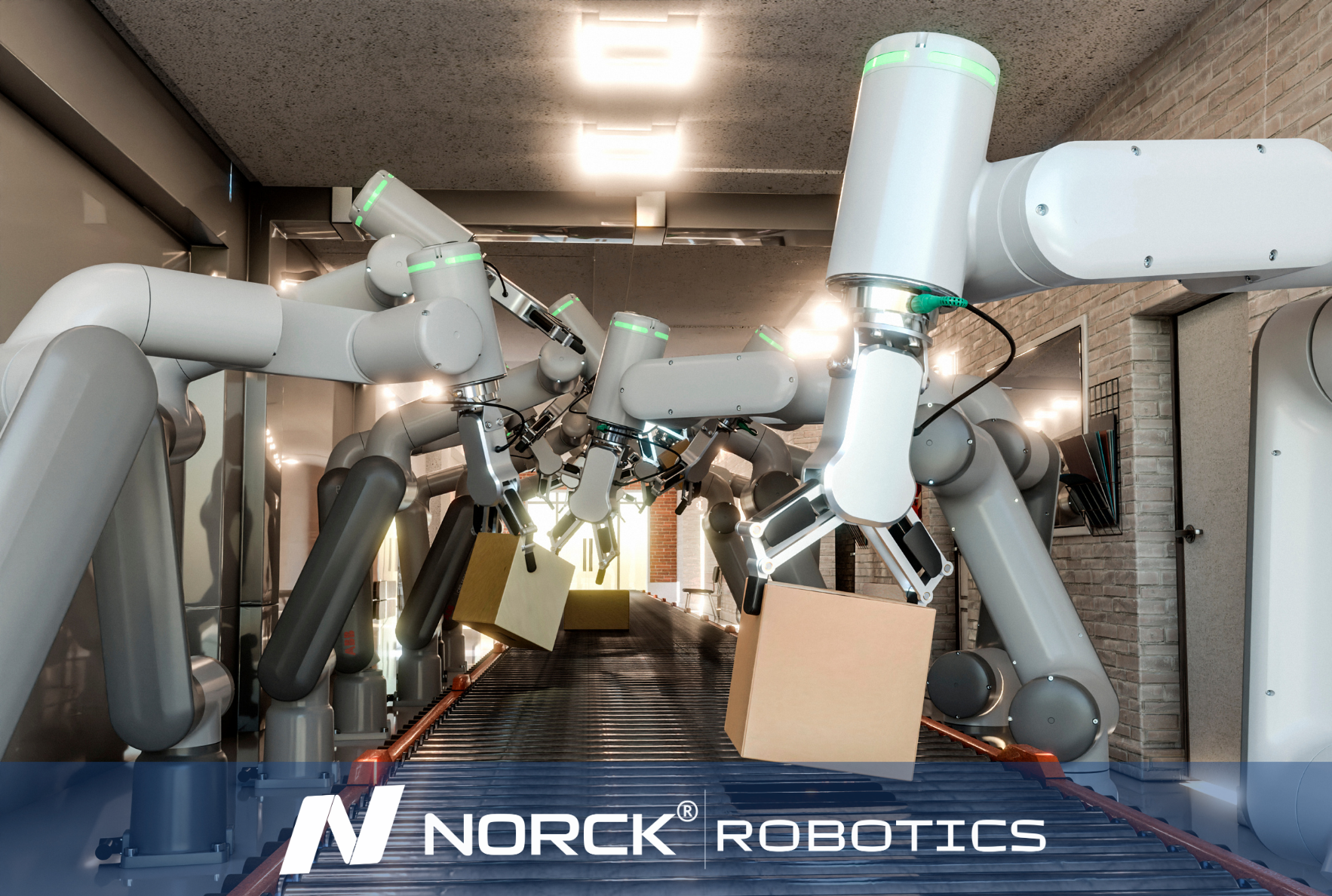
Safety is paramount when dealing with automotive robotic cells because browsers operate at high speed and are an extreme potential hazard if not controlled properly. Due to the weight of the components involved, rapid movement and automated tools positioned in robotic cells, there is no doubt that almost anyone could be injured.

Because of these risks, complete industrial safety systems can be used that include:

  • Physical guarding (fences): Disallow access to any active robot zone, be it accidental or purposeful, thereby eliminating exposure
  • Light curtains: Identify personnel departing a dangerous zone and will immediately stop all activity and functioning of the robot.
  • Safety laser scanners: In the same regards as "virtual" fences; by monitoring defined zones and decommissioning active safety areas controlled by programming logic.
  • Emergency stops: Manual means of stopping immediate machinery functions if in a state of emergency.
  • Safety-rated PLCs/controllers: Allows for a verified fail-safe signal and logic to work in tandem with industry standards.

These systems work great to keep human workers away and safe while allowing robotic systems to work efficiently and reliably.

Commitment to Quality Standards

Norck Robotics, as a division of Norck, proudly operates under ISO 9001:2015 certification.

Key aspects include:

  • International Standards: Ensuring all processes align with globally recognized quality benchmarks.
  • Customer Centric Approach: Prioritizing customer satisfaction through consistent and reliable service.
  • Continuous Improvement: Emphasizing the optimization of operations and workflows.
  • Operational Excellence: Maintaining efficiency and reliability in all activities.

This certification reflects Norck Robotics’ ongoing commitment to quality and performance.

Click here to view our ISO certification.

How do these systems ensure worker protection around powerful robots?

Industrial safety systems are necessary to protect workers in an environment with powered robots, especially in the automotive manufacturing sector. Safety systems exist for hazard detection and stopping robot movement, as well as for keeping humans away from hazards. A robotic cell has many layers of safety features built in; it's made to reduce risk and provide a safe place of work proactively and reactively.

Some important ways that safety systems keep workers safe include:

  • Automated hazard situation detection; a light curtain and safety laser scanners can recognise any intrusion into a zone likely to be reached by the robot, consequently, without physical contact, the robot will stop motion safely.
  • Controlled access; interlock switches and physical guarding will only aid in limiting access to the robot cell when the industrial robot is OFF or in a safe condition.
  • Emergency intervention: Emergency stop buttons, located in clear view, are provided for workers to stop all machinery during any dangerous situation.
  • Continuous monitoring: Safety-rated PLCs monitor all safety components on the robotic cell and allow for immediate response to faults or unsafe environments.
  • Compliance assurance: Safety systems are built to meet appropriate safety standards (i.e., ISO 13849, ANSI/RIA) to ensure legal compliance and assurance to serve operators.

What types of safety components (light curtains, scanners, E-stops) are typically used?

Industrial Safety Systems, very important in automotive robotic cells, are needed to protect people from the potential dangers of high-speed, high-force machinery. These products comprise various complex components that work to detect unsafe conditions, shut down when necessary and create a stationary area surrounding robotic equipment. The use of industrial safety systems is a regulatory requirement to create an environment that mitigates risks, but it is also a vital part of managing unimpeded and safe schemes of production.

Common Safety Components:

  • Light curtains - Part of industrial safety systems, light curtains are invisible beams. If one's light path is interrupted, the feeds will automatically stop machinery, creating a non-contact safety perimeter around a robot.
  • Safety laser scanners - Safety laser scanners are another part of industrial safety systems. Safety laser scanners create 2D zones of safety and will stop the movements of robots if an object enters that listed area. They can provide flexibility and intelligence in safety.
  • Emergency stop buttons (E-stops) - are elements of industrial safety systems. E-stops provide a worker with instantaneous power loss to the operation in an emergency situation.
  • Physical guarding (fences or barriers) - provides mechanical separation of people from machines to reduce the likelihood of accidental contact.
  • Safety-rated programmable logic controllers (PLC) - are used to govern and coordinate all safety devices. Safety-rated PLCs monitor the safety circuits to ensure compliance with safety specifications for the systems.
  • Interlock switches - are part of many industrial safety systems too. Interlock switches ultimately prevent access to the robotic zones and shut off power when safety doors or panels are removed.

GET A QUOTE

Norck Robotics – Expertise in Industrial Safety Systems Manufacturing

Norck Robotics provides engineered industrial safety systems to protect operators, equipment, and processes in high-risk automation environments. Our machine safety systems include sensors, mechanical interlocks, fail-safe systems, and system override methods to provide a safety system that enables productivity without compromising protection. Whether it is a custom safety automation systems or an off-the-shelf productivity solution, Norck Robotics manages to deliver an industrial safety systems that meets international safety requirements and allows for operational uptime to protect employees in the workplace.

  • System-wide Compatibility: Designed to work with robots, actuator, conveyors, and other assets within automation.
  • Precision Built Mechanism: Locking, braking and interlock devices to stop an unsafe operation.
  • Fail-Safe Architecture: Multiple redundant designs that ensure the system is in a safe-state during power loss and/or faults.
  • Industrial protection systems in high-risk zones: Specific and tailored solutions to meet safety requirements in manufacturing, logistics and heavy machinery.
  • Modular Configurations: Configurations that allow easy scaling and changing layouts/process.
  • Expertise from Norck Robotics: Complete team support from risk analysis through to integration and total implementation.

UNMATCHED ROBOTICS ENGINEERING SUPPORT

design for manufacturability
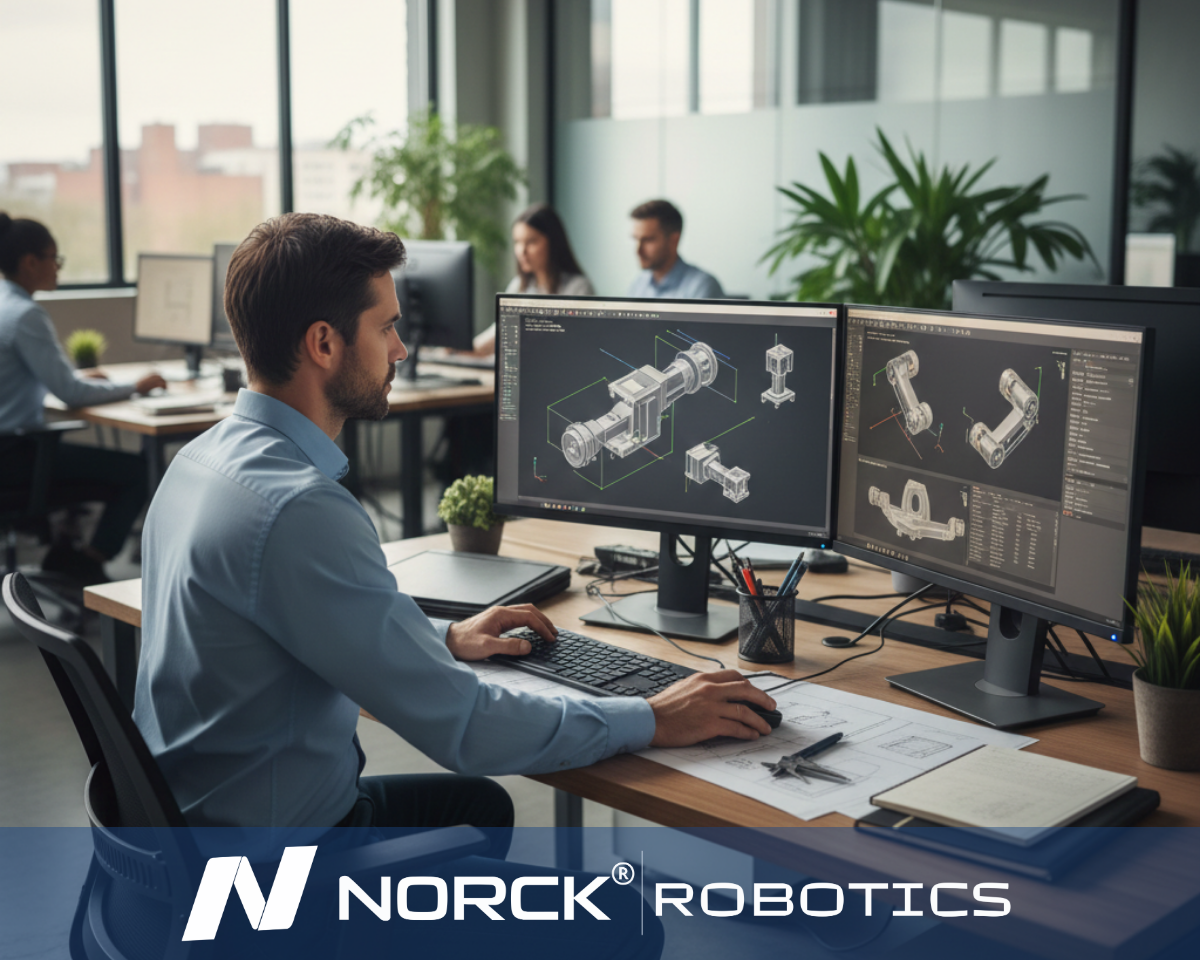
Integrated System Design

Norck Robotics specializes in providing unique robotic automation and engineering solutions designed to meet the specific operational needs of each client. Our expertise covers a wide range of industries and applications.

engineering automation expertise
Engineering Expertise, Every Step of Automation

Norck Robotics delivers turnkey robotic automation and engineering solutions tailored to your specific needs across various industries.

scalable robotics solutions
Your Solution, Your Scale

Whether you need a single robotic cell prototype or full-scale factory automation, Norck Robotics engineers are ready to collaborate with you to bring your concept to life.

automation system optimization
Optimize Your System for Automation

Norck Robotics engineers analyze your existing processes to provide feedback that enhances efficiency, cost-effectiveness, and productivity for robotic integration.

WHY NORCK ROBOTICS?

robotics integration

Access Broad Integration and Project Capacity

In addition to its own expert engineering team, Norck Robotics provides access to a network of hundreds of top-tier system integrators, robot manufacturers, and component suppliers across the United States, Germany, and Europe.

supply chain automation

Create Resilience in Your Supply Chain

Working with Norck Robotics reduces dependency on manual labor, increases production consistency, and secures your operations against unforeseen disruptions, quality issues, and fluctuations. This enhances your company's supply chain resilience.

technology driven robotics

Technology-Driven Solutions

Norck Robotics advances digital automation by developing custom-designed robot grippers, advanced vision systems, and innovative simulation software. With an AI-driven, data-centric approach, it enables smarter system design, optimal performance, and predictive maintenance solutions.

Sustainable engineering approach

Environment-Focused Approach

Norck Robotics encourages its partners to be carbon-neutral by reducing energy consumption and material waste through the efficiency of robotic automation, and prioritizes environmentally conscious suppliers.

GET A QUOTE