Skip to content
chemical resistant materials

Chemically Resistant/Cleanable Materials

Chemically Resistant and Cleanable Materials are engineered to withstand aggressive chemicals, frequent cleaning cycles, and strict hygiene requirements while maintaining mechanical strength, dimensional stability, and long-term reliability. These materials are essential for robotic and automation systems operating in medical, laboratory, semiconductor, food, and chemical processing environments.

At Norck Robotics, chemically resistant and cleanable materials are carefully selected and engineered materials that can resist corrosion, degradation, and contamination when exposed to chemicals, solvents, disinfectants, and cleaning agents. They are also designed to support easy and thorough cleaning, reducing the risk of residue buildup or cross-contamination.

Typical materials include:

  • High-performance plastics such as PEEK, PTFE, PPS, and UHMW
  • Stainless steels such as 316L
  • Aluminum with chemical-resistant coatings or anodizing
  • Advanced composites and engineered polymers

Why is chemical resistance an important consideration for materials in lab automation?

Chemical resistant materials are very important factor for lab automation systems - the fact is that almost all automation equipment is exposed to harsh chemicals, reagents, and solvents in one way or another during testing and analysis. Any material not chemically resistant is either going to break down, corrode, or leach to create contamination in the samples, thus damaging the equipment as well as the results. Strength and performance are maintained in chemically resistant materials, similar to stainless steel, PEEK, PTFE, or POM, even if repeatedly exposed to aggressive materials. The continuous chemical exposure ensures that the part will not degrade; the surface finish and smoothness allow for cleaning while preventing the buildup of residual matter and preventing cross contamination - and this is key to sterilizing and having consistent conditions in sensitive laboratory environments.

Prevents wear-and-tear on materials - Chemically resistant materials will not corrode or break down the material, and therefore preserves the long-term reliability under the aggressive lab environment.

Preserves sample chemistry - Non-reactive surfaces protect against adsorption or other chemical interactions with reagents.

Maintains cleanroom compliance - Smooth surfaces facilitate cleaning and reduce residue buildup and microbial growth for hygiene standards.

Commitment to Quality Standards

Norck Robotics, as a division of Norck, proudly operates under ISO 9001:2015 certification.

Key aspects include:

  • International Standards: Ensuring all processes align with globally recognized quality benchmarks.
  • Customer Centric Approach: Prioritizing customer satisfaction through consistent and reliable service.
  • Continuous Improvement: Emphasizing the optimization of operations and workflows.
  • Operational Excellence: Maintaining efficiency and reliability in all activities.

This certification reflects Norck Robotics’ ongoing commitment to quality and performance.

Click here to view our ISO certification.

Which materials offer good resistance to common lab chemicals?

In terms of general lab automation systems , material options with high chemical resistances are crucial to give maximum durability and promote the protection of degradation and contamination of the automation components. Selecting material options with high chemical resistance will give the maximum compatibility with many of the most commonly used lab reagents and cleaning agents typically encountered in lab workflows.

  • Stainless steel resistant to many acids, bases and solvents; Strong choice for many structural and mechanical components in automation systems.
  • PEEK (polyetheretherketone) a high-performance plastic with good chemical resistance and thermal stability; Commonly made into liquid handling components.
  • PTFE (polytetrafluoroethylene) have a very strong resistance to most chemicals and exhibit very low friction; Commonly used to make seals, tubing, and gaskets
  • POM (polyoxymethylene, or acetal) has good resistance to many organic solvents and bases. Offers good mechanical strength and dimensional stability.
  • Glass or borosilicate glass is mostly used in analytical devices and equipment because of its good thermal and chemical resistance.

Why is easy cleanability important for components used in lab environments?

Easy cleanability is important for laboratory-use components to ensure high hygiene standards, avoiding cross-contamination, and delivering repeatable and consistent test results. All automated processes use and track sensitive biological and/or chemical specimens and the seconds traces of residue can alter: the results, assay processes, or the experiments' span of time from test to assay settings.

  • Smooth, non-porous surfaces prohibit the build-up of residues, and compatibility with disinfectants speed the cleaning and sanitizing process.
  • Easy cleanability diminishes downtime between runs, and helps ensure compliance with a lab's safety and cleanliness protocols.
  • In instances where biohazards, reagents, or pharmaceuticals are in use, regular cleaning is required, too - materials and finishes must endure intense cleaning cycles repeatedly without degradation.
  • Cleanability helps ensure sterile conditions and maintain clean surfaces in laboratory environments, mainly clinical, diagnostic, and pharmaceutical laboratories. It also:
  • Affects microbial growth, corrosion, or deterioration to some extent on a surface, as these can impact a systems ability to provide accurate measurements.
  • Maintains the above requirements such as compliance with regulatory and governing bodies worldwide or the standards of the industry they work in (GLP, GMP, or ISO certification, etc.) that promote laboratory hygiene and safety.

GET A QUOTE

Norck Robotics – Expertise in Chemically Resistant/Cleanable Materials Manufacturing

Norck Robotics stands at the forefront of innovation in the manufacturing of chemical resistant materials and cleanable materials designed for demanding industrial environments. With years of experience in engineering advanced solutions, Norck Robotics specializes in the development of high-performance chemical-proof materials that meet the rigorous standards required by the pharmaceutical, food processing, laboratory, and chemical industries. Our commitment to precision, safety, and durability allows us to provide cutting-edge chemical-resistant construction materials that perform reliably under exposure to harsh solvents, corrosive agents, and aggressive cleaning processes.

Our engineering team collaborates closely with clients to develop custom materials and components tailored to specific operational requirements, ensuring that all products meet both regulatory compliance and real-world durability. From robotic parts to facility infrastructure, Norck Robotics ensures superior resistance, easy cleanability, and long-term integrity across all applications.

Key Areas of Expertise and Value Proposition:

  • Advanced Chemically Resistant Materials: Engineered to withstand aggressive acids, bases, and solvents commonly used in industrial and laboratory environments.

  • Cleanable Materials for Sterile Settings: Surfaces and components are designed to resist contamination and allow for easy sanitation, crucial for healthcare, biotech, and food sectors.

  • Development of Chemical-Proof Materials: Materials that maintain structural integrity and performance when exposed to corrosive environments.

  • Chemical-Resistant Construction Materials: Custom-designed building components ideal for cleanrooms, manufacturing plants, and storage facilities dealing with hazardous substances.

  • Customized Solutions: Tailored material compositions and component designs based on application-specific chemical exposure and cleaning protocols.

  • Durability & Compliance: All materials meet industry standards for chemical resistance, hygiene, and longevity, reducing downtime and maintenance costs.

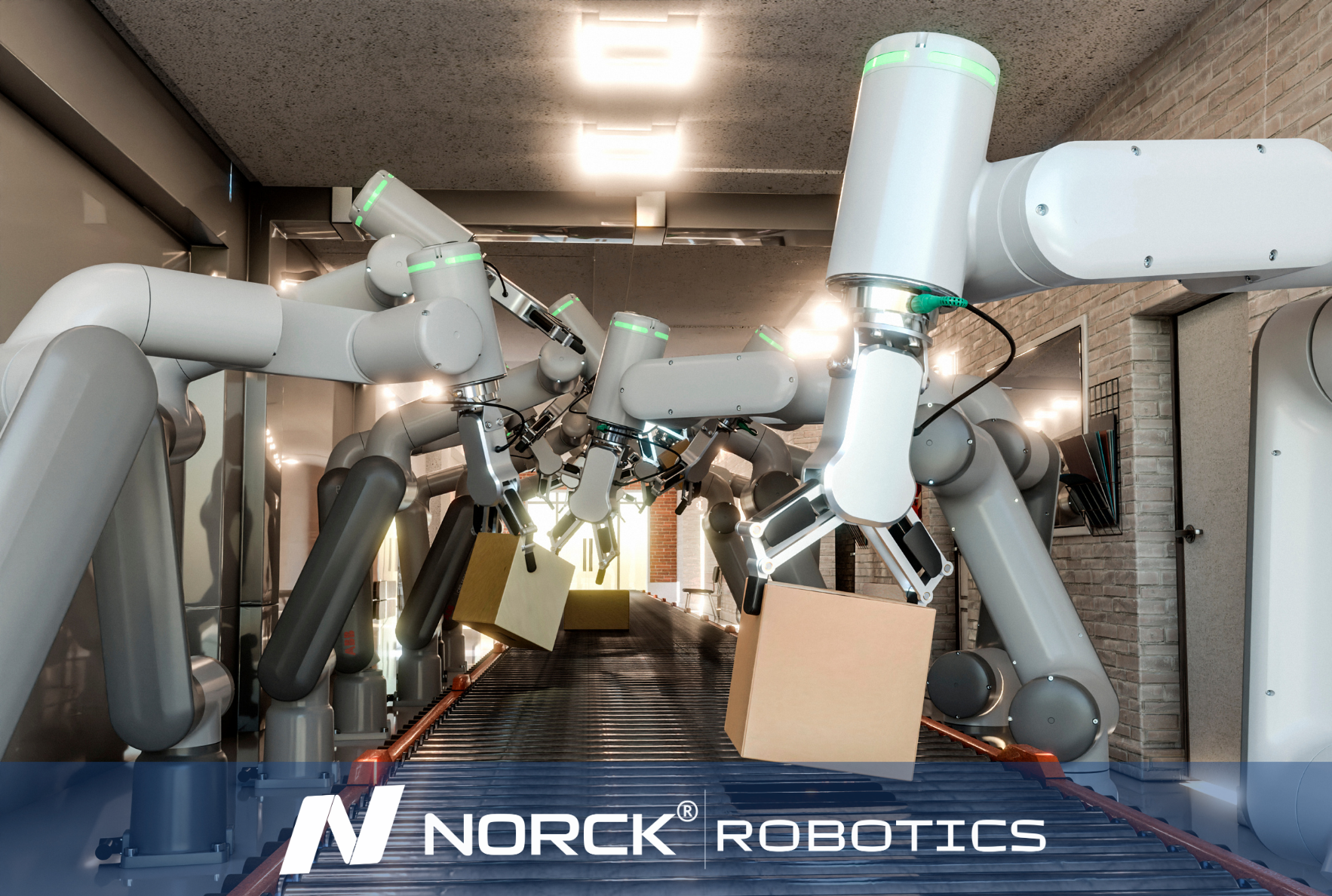
  • Integration with Robotic Systems: Specialized parts for robots that operate in chemically intensive or clean-critical environments.

  • Sustainable & Safe: Eco-friendly materials with low emissions and reduced reactivity ensure a safer workplace and environmental footprint.

UNMATCHED ROBOTICS ENGINEERING SUPPORT

design for manufacturability
Integrated System Design

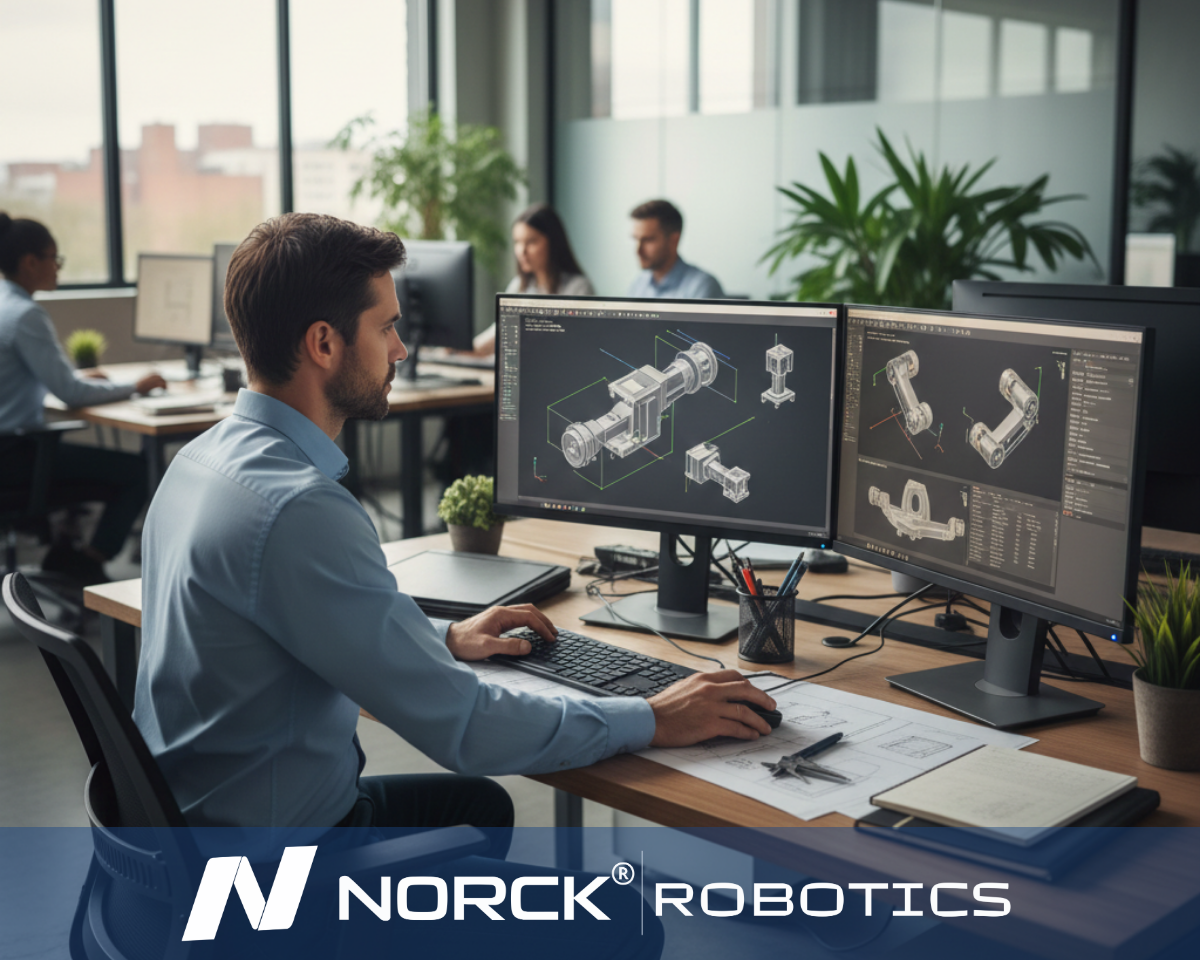
Norck Robotics specializes in providing unique robotic automation and engineering solutions designed to meet the specific operational needs of each client. Our expertise covers a wide range of industries and applications.

engineering automation expertise
Engineering Expertise, Every Step of Automation

Norck Robotics delivers turnkey robotic automation and engineering solutions tailored to your specific needs across various industries.

scalable robotics solutions
Your Solution, Your Scale

Whether you need a single robotic cell prototype or full-scale factory automation, Norck Robotics engineers are ready to collaborate with you to bring your concept to life.

automation system optimization
Optimize Your System for Automation

Norck Robotics engineers analyze your existing processes to provide feedback that enhances efficiency, cost-effectiveness, and productivity for robotic integration.

WHY NORCK ROBOTICS?

robotics integration

Access Broad Integration and Project Capacity

In addition to its own expert engineering team, Norck Robotics provides access to a network of hundreds of top-tier system integrators, robot manufacturers, and component suppliers across the United States, Germany, and Europe.

supply chain automation

Create Resilience in Your Supply Chain

Working with Norck Robotics reduces dependency on manual labor, increases production consistency, and secures your operations against unforeseen disruptions, quality issues, and fluctuations. This enhances your company's supply chain resilience.

technology driven robotics

Technology-Driven Solutions

Norck Robotics advances digital automation by developing custom-designed robot grippers, advanced vision systems, and innovative simulation software. With an AI-driven, data-centric approach, it enables smarter system design, optimal performance, and predictive maintenance solutions.

Sustainable engineering approach

Environment-Focused Approach

Norck Robotics encourages its partners to be carbon-neutral by reducing energy consumption and material waste through the efficiency of robotic automation, and prioritizes environmentally conscious suppliers.

GET A QUOTE