Skip to content
Linear Guide Rails

Linear Guides & Rails

What is the function of linear guides and rails in a motion system?

Movement systems typically involve Linear Guides and Rails for smoothly moveable, precise, and highly controllable linear motions. Any performance aspect required of these systems must include the following:

Precision and Accuracy:

The essence of Linear Guides and Rails is to provide accurate linear motion by aligning the moving part in an absolutely straight line. Applications requiring such precision differ from CNC machines to 3D printers and to automation systems; therefore, in these systems, anything less than perfect alignment would cause defects.

Friction Resistance:

Linear Guide Rails minimize frictional forces so much on any mechanism that the machinery can smoothly slide over with any physical damage inflicted. This prolongs the service life of tools and lowers maintenance cost.

Heavy Load Bearings:

The linear guide and rail designs can perform heavy-duty applications without disregarding functionality. Evenly distributed stress across a well-designed surface manifests stable movement, with the capacity to retain stability over high-stress areas. 

High Speed and Productivity:

By minimizing resistance and friction, linear guides provide smooth motion to increase speed and productivity. 

Enhanced Stability and Rigidity:

They are intrinsically rigid, capable of maintaining system stability, while operationally high-speed or heavy load.

In a nutshell, Linear Guides and Rails are critical in all motion systems that require precision, durability, and efficient functions. They smoothen and yield fatigue-free linear motion. Therefore, they are essential in any modern industrial and automation applications.

How do they minimize friction and ensure precise straight-line movement?

The Linear Guides and Rails really do form skeletal parts of motion systems that require high precision with lots of resistance. Here is how they do it:

  • Friction Reduction Mechanism: Linear Guides and Rails utilize recirculating ball rollers or roller bearings between the rail and carriage that are massively effective at rolling. Compared to sliding contact, rolling reduces significantly friction, yielding smooth torque-free movement.
  • Precision Machining: They are machined with very tight tolerances and well finishes; thus, there is a minimum play between the components, Schilt acknowledged in its consistent alignment for accurate linearity.
  • Load Balancing: The design of Linear Guides and Rails ensures that the load is distributed evenly over the contact surfaces. This reduces localized wear and maintains stability along distance, which is crucial for accuracy.
  • Self-Lubrication Capability: Many modern ones come with built-in lubrication units that keep friction low over a long period without needing constant maintenance.

Such guides are purposely shaped so that deviation or side movement will not work so that the carriage would trace out a perfect linear path.

With the addition of all the innovative elements, Linear Guides and Rails combined make provision for effective low-friction traveling and highly accurate position control that is optimally suited for automation, robotics, and precision machinery.

GET A QUOTE

What are the common types (ball guides, roller guides)?

Linear Guides and Rails come in different designs for performance needs. The basic ones are ball guides and roller guides, each with a set of merits to enter into the motion systems. Here is a narration:

Ball Guides:

Ball Linear Guides and Rails are operating by means of recirculating ball from the rail into its block. It will suit applications that involve high-speed movement but moderate load capacity. Since these rolling balls reduce friction, it makes smooth and precise linear movement. Examples of these characteristics are seen in CNC machines, 3D printers, and automated assembly systems.

Roller Guides:

Roller-type Linear Guides and Rails are similar to ball-type guides, except that it uses cylindrical rollers instead of balls. The larger contact surface makes them more suitable for high-load applications. Roller guides offer rigidity and are heavier in mechanical applications and tolerance.

  • Ball Guides are lower in noise and speed but higher in rigidity and load-carrying capacity. Depending on the needs of the application, implements used may vary.
  • Knowing the types of Linear Guide and Rail would lead to the system that could provide good motion control in terms of durability and accuracy in an industrial application.

Commitment to Quality Standards

Norck Robotics, as a division of Norck, proudly operates under ISO 9001:2015 certification.

Key aspects include:

  • International Standards: Ensuring all processes align with globally recognized quality benchmarks.
  • Customer Centric Approach: Prioritizing customer satisfaction through consistent and reliable service.
  • Continuous Improvement: Emphasizing the optimization of operations and workflows.
  • Operational Excellence: Maintaining efficiency and reliability in all activities.

This certification reflects Norck Robotics’ ongoing commitment to quality and performance.

View our ISO certification standards and compliance documentation.

Why are they crucial for the accuracy of linear actuators?

Linear Guides and Rails are the most crucial influences upon the accuracy and performance of linear actuators. Here is how they maintain accurate motion control for various applications:

Maintaining Linear Motion: Linear guides and rails ensure that the linear actuator moves completely straight without any deviation. It's crucial for robotic tasks, cnc linear guide rails and automation systems, for any physical misalignment could induce grievous aberrations.

Reducing Friction and Vibration: These components reduce friction on the moving parts via rolling elements, which are mainly recirculating ball-bearings or rollers. This smoothens the motion, reduces vibration, and hence helps in sustaining accuracy during high-speed operations.

Minimizing Backlash and Play: Linear Guides and Rails can be easily manufactured under robust tolerances minimizing backlash, being the unwanted movement or slack that can alter actuator precision. This ensures repeatability and reliable position every time.

Load Support and Rigidity: The linear guides give supporting structures so that the actuator can bear heavy loads without flexing or moving. Such rigidity helps hold the motion accuracy-in-time, even under dynamic loading.

Hence linear guides and rails are at the root of the accuracy, stiffness, and efficiency of linear actuators in many industries.

Norck Robotics - Expertise in Linear Guides & Rails Manufacturing

Norck Robotics designs and manufactures rugged, high-performance
linear guide rail systems that facilitate smooth, stable, and accurate motion in automated systems. Our precision linear guides are built for even the most rigorous of environments with tight tolerances and load optimization-which are ideal for robotics, CNC machinery, medical devices, and automation in an industrial setting. If you are looking for lightweight rails or heavy-duty bearing blocks, Norck Robotics offers scalable custom linear guide systems to fit your application requirements with long-term reliability.

  • Compact and modular configurations: No need to sacrifice performance if size constraints are a factor with these systems.
  • Consistent precision: Built for straight, low-friction travel under dynamic loads, and maintains accurate end points.
  • High load capability: Designed for strength and rigidity for static or dynamic applications.
  • Corrosion-resistant materials: Available coatings and finishes for cleanroom, washdown applications and harsh applications.
  • Custom fit and performance: Our custom linear guide systems can accommodate your specifications and loads.
  • Technical support from Norck Robotics: We can assist you from selection through system level integration.

UNMATCHED ROBOTICS ENGINEERING SUPPORT

design for manufacturability
Integrated System Design

Norck Robotics specializes in providing unique robotic automation and engineering solutions designed to meet the specific operational needs of each client. Our expertise covers a wide range of industries and applications.

engineering automation expertise
Engineering Expertise, Every Step of Automation

Norck Robotics delivers turnkey robotic automation and engineering solutions tailored to your specific needs across various industries.

scalable robotics solutions
Your Solution, Your Scale

Whether you need a single robotic cell prototype or full-scale factory automation, Norck Robotics engineers are ready to collaborate with you to bring your concept to life.

automation system optimization
Optimize Your System for Automation

Norck Robotics engineers analyze your existing processes to provide feedback that enhances efficiency, cost-effectiveness, and productivity for robotic integration.

WHY NORCK ROBOTICS?

robotics integration

Access Broad Integration and Project Capacity

In addition to its own expert engineering team, Norck Robotics provides access to a network of hundreds of top-tier system integrators, robot manufacturers, and component suppliers across the United States, Germany, and Europe.

supply chain automation

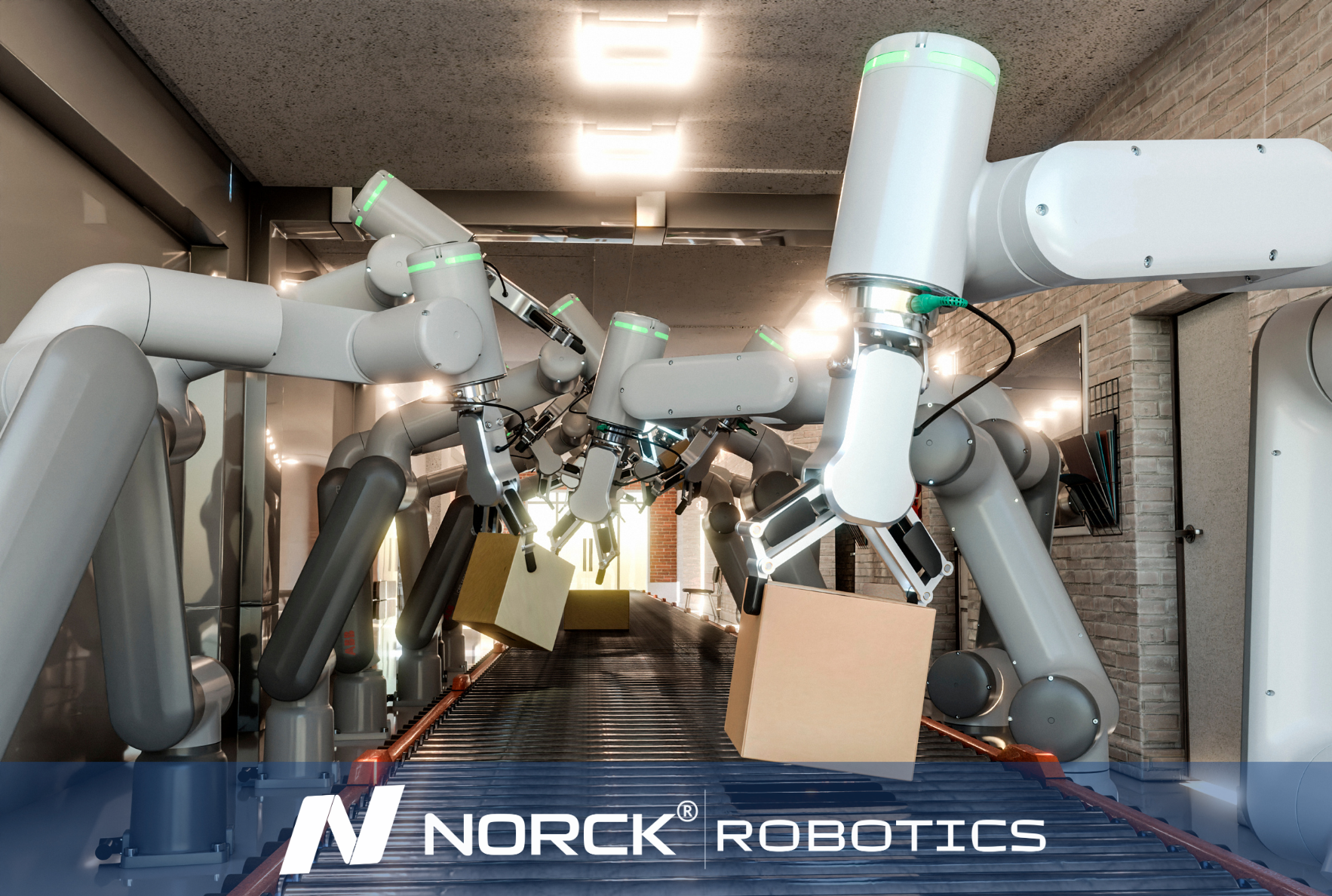
Create Resilience in Your Supply Chain

Working with Norck Robotics reduces dependency on manual labor, increases production consistency, and secures your operations against unforeseen disruptions, quality issues, and fluctuations. This enhances your company's supply chain resilience.

technology driven robotics

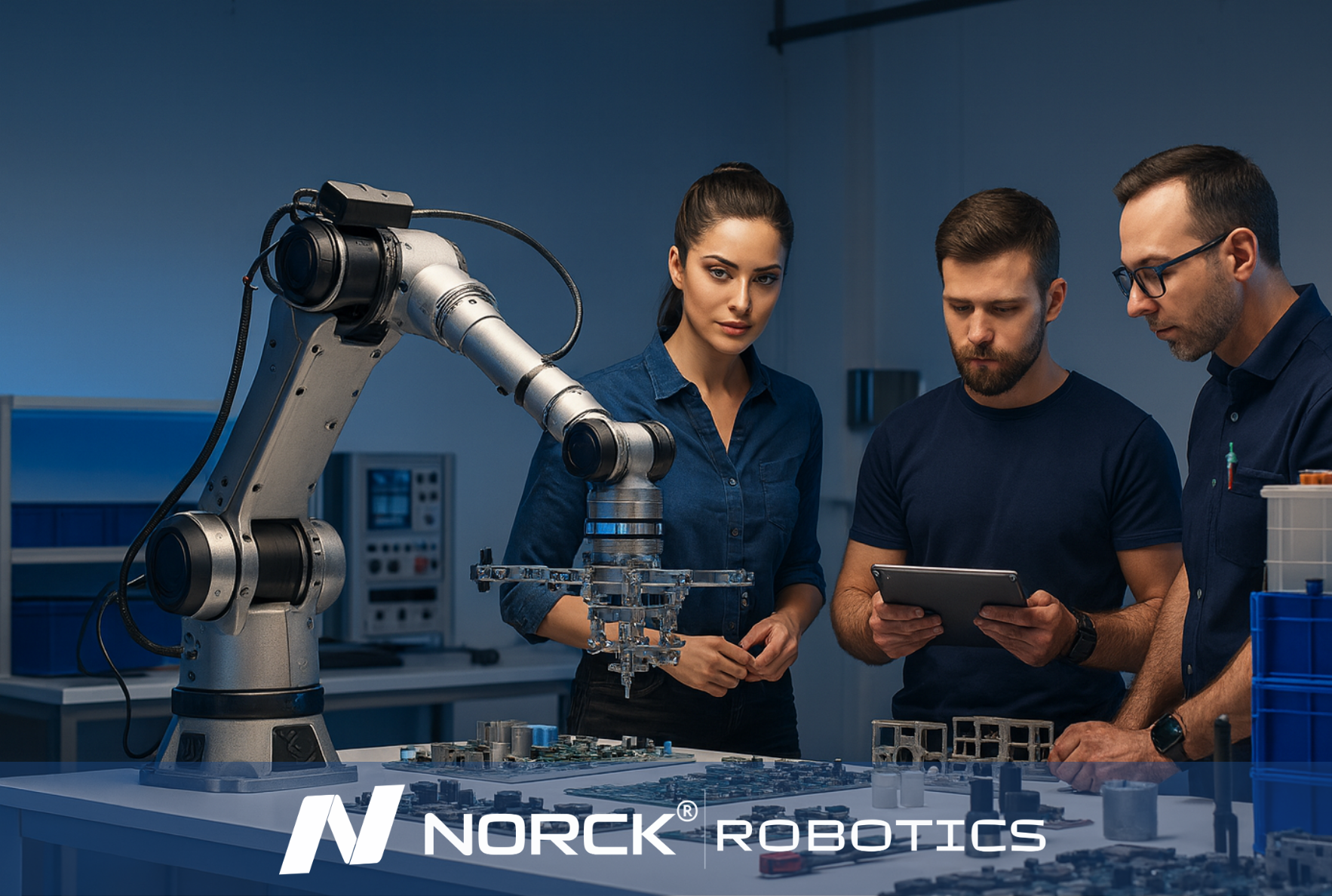
Technology-Driven Solutions

Norck Robotics advances digital automation by developing custom-designed robot grippers, advanced vision systems, and innovative simulation software. With an AI-driven, data-centric approach, it enables smarter system design, optimal performance, and predictive maintenance solutions.

Sustainable engineering approach

Environment-Focused Approach

Norck Robotics encourages its partners to be carbon-neutral by reducing energy consumption and material waste through the efficiency of robotic automation, and prioritizes environmentally conscious suppliers.

GET A QUOTE